The greater Phoenix area is home to more than 25 different cities and towns. Many of the major cities of the Salt River Valley were established during the period following the Civil War through World War I. Anglo settlers founded cities such as Tempe (1866), Phoenix (1867), Mesa (1878), Peoria (1886), Glendale (1887), Scottsdale (1894), Gilbert (1902), Chandler (1912), and Goodyear (1917). These early settlements were just a few square miles in size, and were separated from each other by miles of unspoiled desert.
By 1945, the largest of these cities, Phoenix, had a population of approximately 100,000 residents. A number of factors would lead to a population boom starting in the 1950s and lasting to the present day. These factors include:
- Favorable weather conditions and mild winters
- Widespread use of air conditioning in the 1950s
- Postwar economic boom
- Rapid expansion of air travel (jet age)
- Construction of the Central Arizona Project canal system (1973-1993)
- An abundance of cheap land
These factors contributed to the Phoenix region’s rapid expansion over the past several decades. Today, the Phoenix-Mesa-Scottsdale Metropolitan Statistical Area has a population of 4.84 million people and is the 14th largest metro area in the United States.
While they were once separate from each other, Phoenix-area cities have grown so much that today it is hard to tell where one city ends and another begins. The proliferation of franchise/chain stores and restaurants, big box retailers, and tract homes has resulted in a landscape that looks nearly identical from one end of the Valley to the other. Whatever unique identity these cities may have had a century ago is all but gone today.
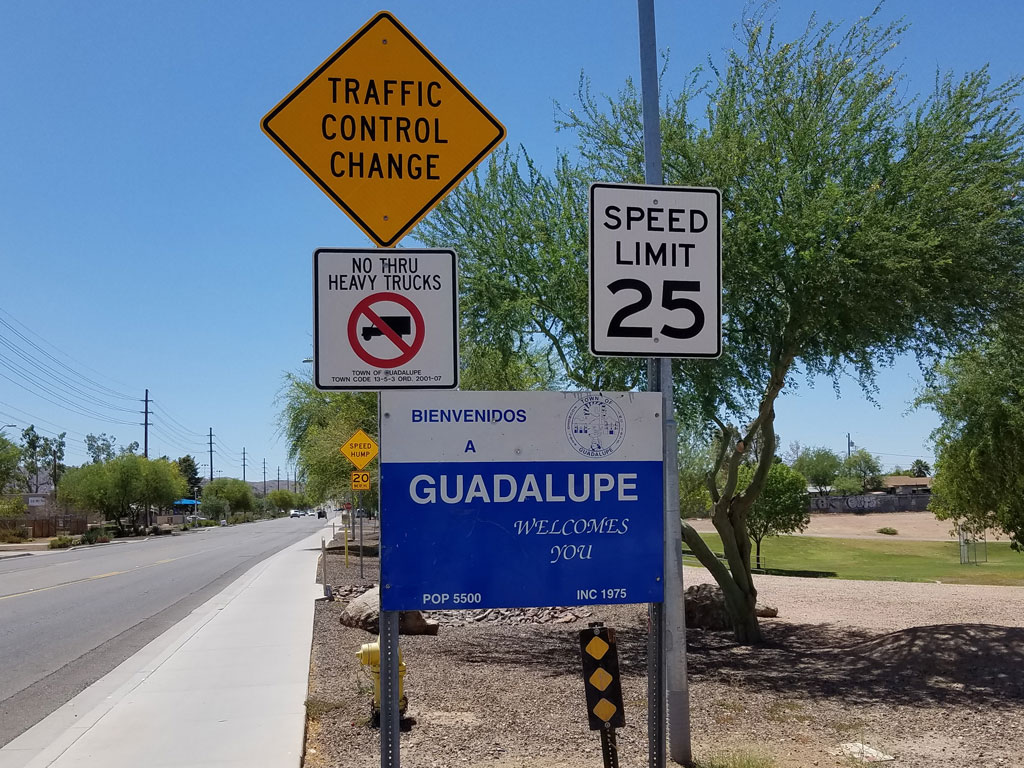
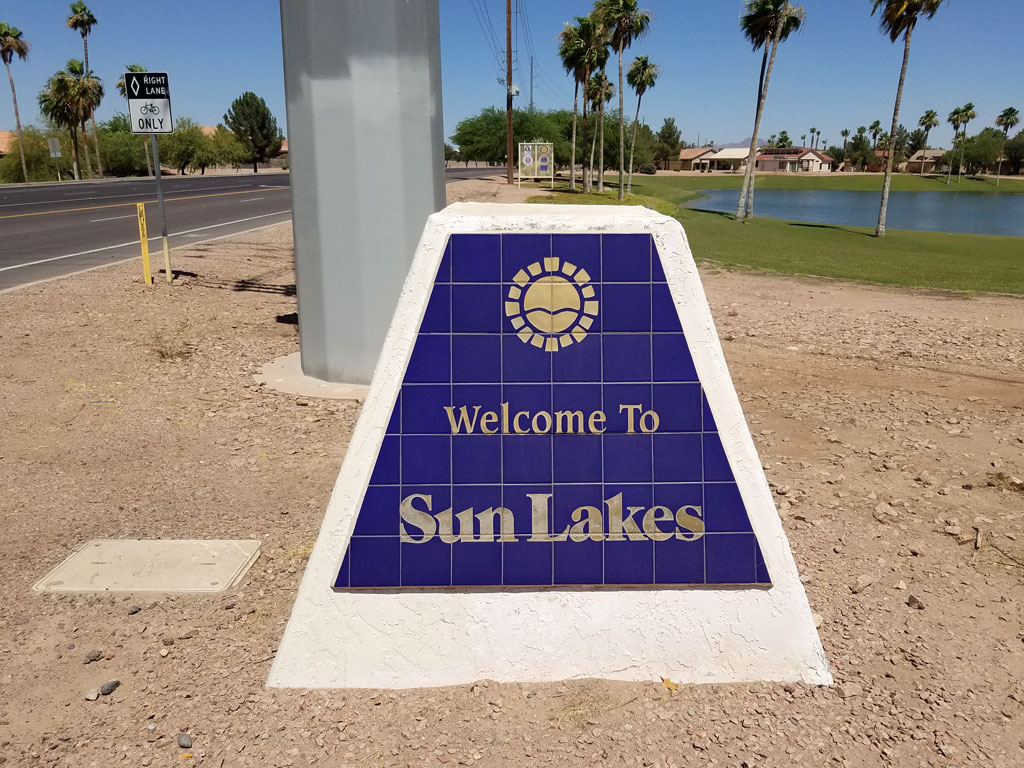
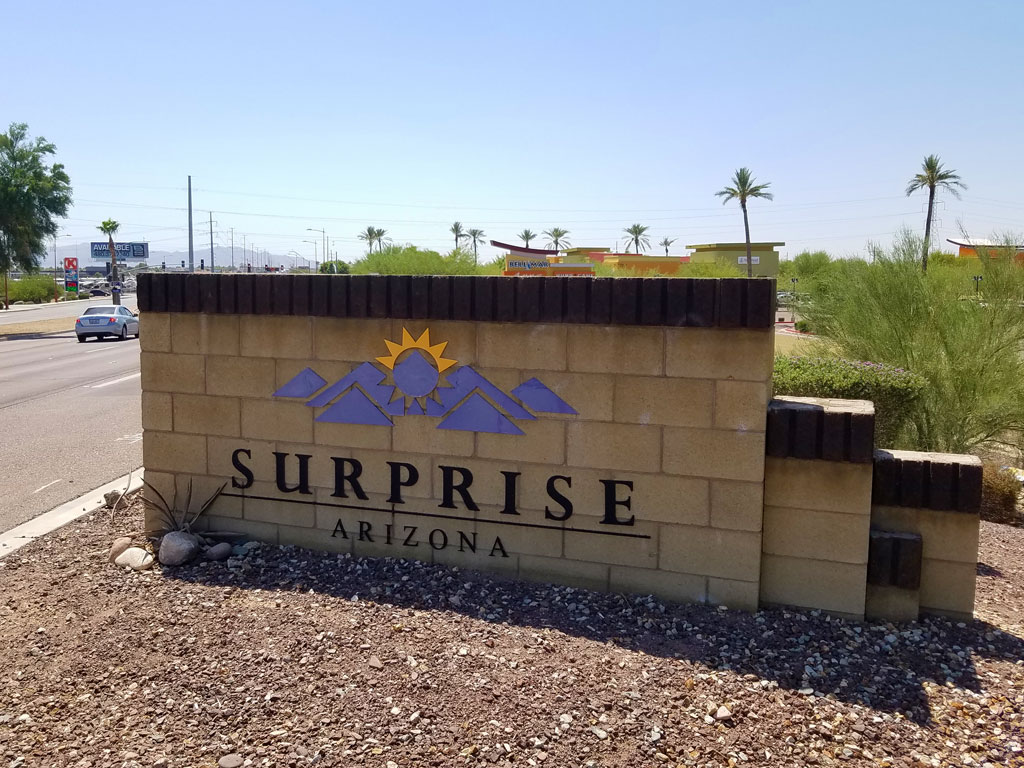
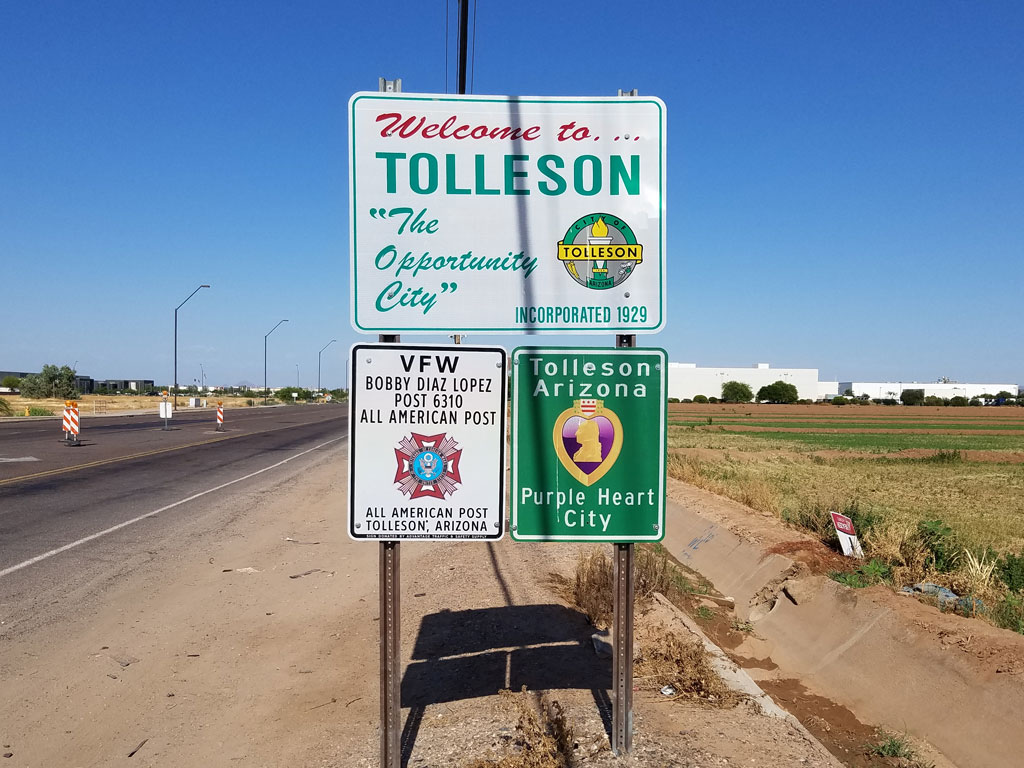
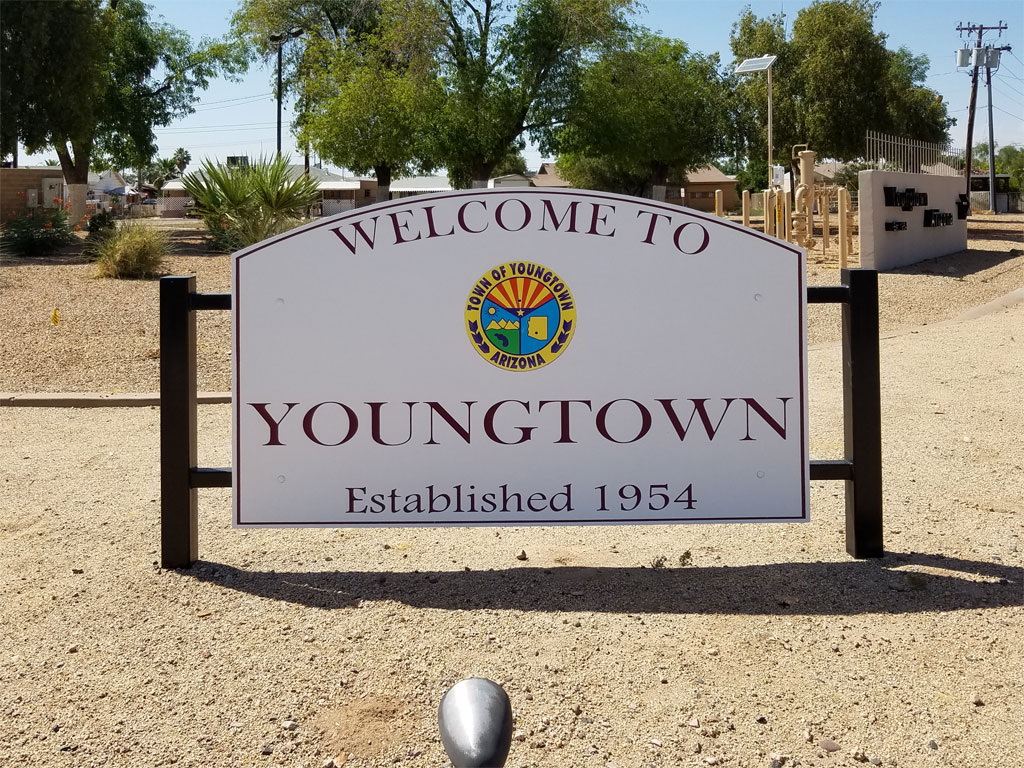
Recently, I have noticed that cities are installing signage at their boundary lines as a way to identify where one city ends and another begins. These boundary markers are increasingly elaborate, artistic, and unique. Small, metal signs have given way to ornate markers and monuments located on prominent street corners.
Signage has long been a form of artistic expression, going back to the neon signs of Route 66 and early Las Vegas. When one motel or coffee shop would install a sign, it wasn’t long until their competitor had a larger and flashier sign. This one-upmanship is present today as cities try to outdo each other with their entry monuments.
There is no law or ordinance in Arizona that requires cities to have boundary signs, and yet every incorporated city and town in the greater Phoenix area city has chosen to identify itself with these distinctive “entry monuments.” I find this phenomenon to be quite interesting.
In 2018, I conducted a photographic survey of entry monuments of Phoenix-area cities. The results are below.
All images copyright 2018 Trevor Freeman. Please contact me for licensing and reproduction.